The Real Purpose of Pilgrimage
Devi Bhagavata Purana / The Real Purpose of Pilgrimage
The Real Purpose of Pilgrimage
The Real Purpose of Pilgrimage: A Deep Study of Shrimad Devi Bhagwat Puran (Skanda 6, Chapter 12)
Introduction
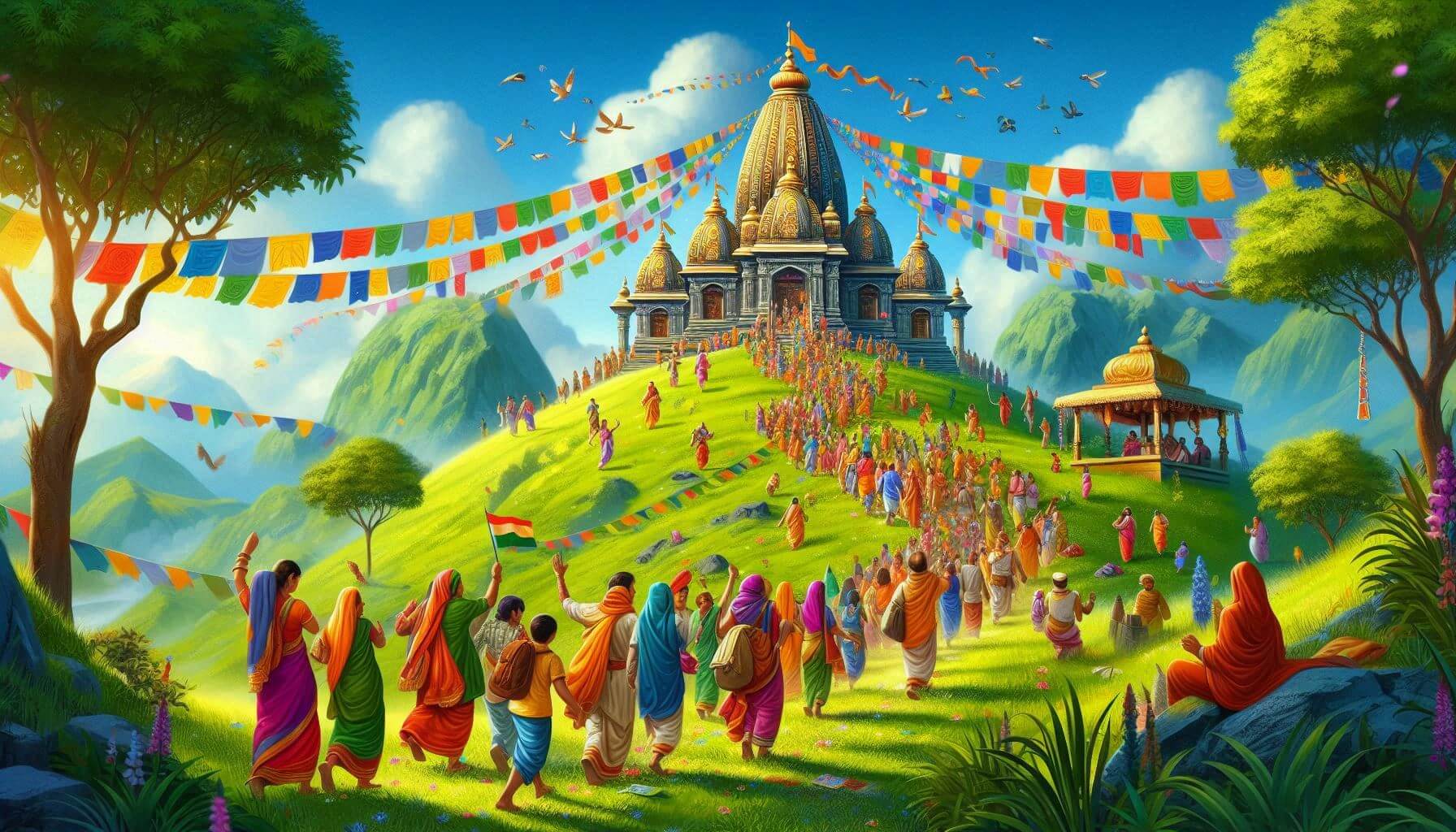
Pilgrimage (tirtha-yatra) has been an integral part of Sanatan Dharma for thousands of years. Millions travel to sacred rivers, temples, mountains, and kshetras with faith and devotion. However, Shrimad Devi Bhagwat Puran, Skanda 6, Chapter 12 provides a transformative revelation: while visiting holy places brings merit, true purification does not happen through external rituals but through inner cleansing obtained from Divine Knowledge.
This long-form article analyzes this chapter deeply and presents the authentic purpose of pilgrimage as taught by Maharishi Vyasa.
Sacred Rivers and Important Tirthas According to Devi Bhagwat Puran
Vyasa Ji lists several holy rivers considered extremely purifying in the scriptures. These include:
- Ganga
- Yamuna
- Sarasvati
- Narmada
- Gandaki
- Sindhu
- Gomati
- Tamasa
- Cauvery
- Chandrabhaga
- Sarayu
- Tapi …and numerous others.
Rivers that flow directly into the ocean are declared even holier.
Famous Tirthas Mentioned
Vyasa Ji highlights several sacred places of pilgrimage:
- Pushkara
- Kurukshetra
- Prayagraj
- Prabhas Tirtha
- Naimisharanya
- Dharmaaranya
- Arbudaranya
These regions have been centers of spiritual austerity, meditation, and divine worship for ages.
Holy Mountains and Lakes
Some mountains are considered especially sacred:
- Shrishaila
- Sumeru
- Gandhamadana
Among lakes (sarovars), the most revered are:
- Manasarovar
- Vindusarovar
- Aksoda
Each of these holds deep historical and spiritual significance in Puranic literature.
The Deeper Message: Limits of External Pilgrimage
While describing the importance of physical tirthas, Vyasa Ji gives one of the most powerful spiritual truths in all Puranic literature.
⭐ Physical water can only cleanse the body—not the mind.
Vyasa Ji gives a strong warning:
“The waters of the sacred places can only wash the outside dirts and the impurities of the physical bodies; they can never wash the impurities of their inner minds.”
This statement forms the core of this chapter.
If physical bathing were capable of purifying the mind, then why did the following happen?
Why did Munis living on the Ganga’s banks still feel anger, jealousy, and rivalry?
Vyasa Ji mentions:
- Even Muni Vashistha and Rishi Vishvamitra—living near sacred waters—were entangled in disputes.
- Respected sages often displayed anger, pride, enmity, and competition.
This proves beyond doubt:
External waters (bahya snan) cannot cleanse internal impurities (antarik mala).
Thus, physical tirthas alone cannot liberate a soul.
The Real Tirtha: Chitta Shuddhi (Purification of the Heart)
Vyasa Ji categorizes purity into three forms:
- Dravya Shuddhi – purity of materials used
- Kriya Shuddhi – purity of actions and rituals
- Chitta Shuddhi – purity of mind
Among these, Chitta Shuddhi is the highest, rarest, and most essential.
The mind is constantly affected by:
- Anger (krodh)
- Greed (lobh)
- Desire (kaam)
- Ego (ahankar)
- Pride (mada)
Physical rituals cannot eliminate these deep-rooted impurities.
Vyasa Ji says:
“The Gyan Ganga flowing within purifies more than Ganga and all tirthas.”
This is the true meaning of inner bathing—spiritual cleansing through true knowledge.
Why Most Pilgrimages Fail
Vyasa Ji gives several reasons:
1. Pilgrims often break their daily spiritual disciplines.
Leaving Nitya Karma makes the journey spiritually weak.
2. Meeting various people leads to distractions, gossip, and impurity.
3. Physical water can wash the body, not the soul.
4. Without Divine Knowledge, rituals become hollow and ineffective.
Thus:
Pilgrimage without proper knowledge may lead to more sin than virtue.
Who Gives Chitta Shuddhi? The Tatvadarshi Saint
Vyasa Ji makes the ultimate declaration:
“One’s impurity of mind is washed away only when one meets a man possessed of Divine Knowledge.”
This “man of Divine Knowledge” is none other than the Tatvadarshi Saint described in the Bhagavad Gita (4:34).
Only such a Saint can:
- Reveal the true path of worship
- Provide the correct method of devotion
- Dispel doubts and ignorance
- Give the hidden mantras of salvation
- Connect the soul with the Supreme God
Without this Divine Knowledge, even millions of pilgrimages remain incomplete.
Conclusion
After describing the glories of external tirthas, the Puran gives an uncompromising conclusion:
⭐ Chitta Shuddhi Tirtha is the only true tirtha.
⭐ All other tirthas done without Divine Knowledge become sources of sin.
⭐ Only a Tatvadarshi Saint provides the Gyan Ganga that purifies the inner heart.
This is the eternal message of Shrimad Devi Bhagwat Puran.
Frequently Asked Questions (FAQ)
1. What is the most important message of Skanda 6, Chapter 12?
That inner purification (Chitta Shuddhi) is greater than external pilgrimage.
2. Can bathing in Ganga remove sins?
It removes physical impurity but cannot cleanse mental impurities like anger, pride, and jealousy.
3. How can one attain true purification?
By receiving Divine Knowledge (Gyan Ganga) from a Tatvadarshi Saint.
4. Are pilgrimages useless?
Not useless, but incomplete and often ineffective without inner purification.
← The Divine Marriages of Brahma, Vishnu, and Shiva — Durga’s Cosmic Assignments The Inescapable Fruits of Karma →