The Story Behind Shiva’s Phallic Form (Shivling)
Shiv Purana / The Story Behind Shiva’s Phallic Form (Shivling)
The Story Behind Shiva’s Phallic Form (Shivling)
The Story Behind Shiva’s Phallic Form (Shivling): An Account from Shiv Purana – Kotirudra Samhita, Chapter 12
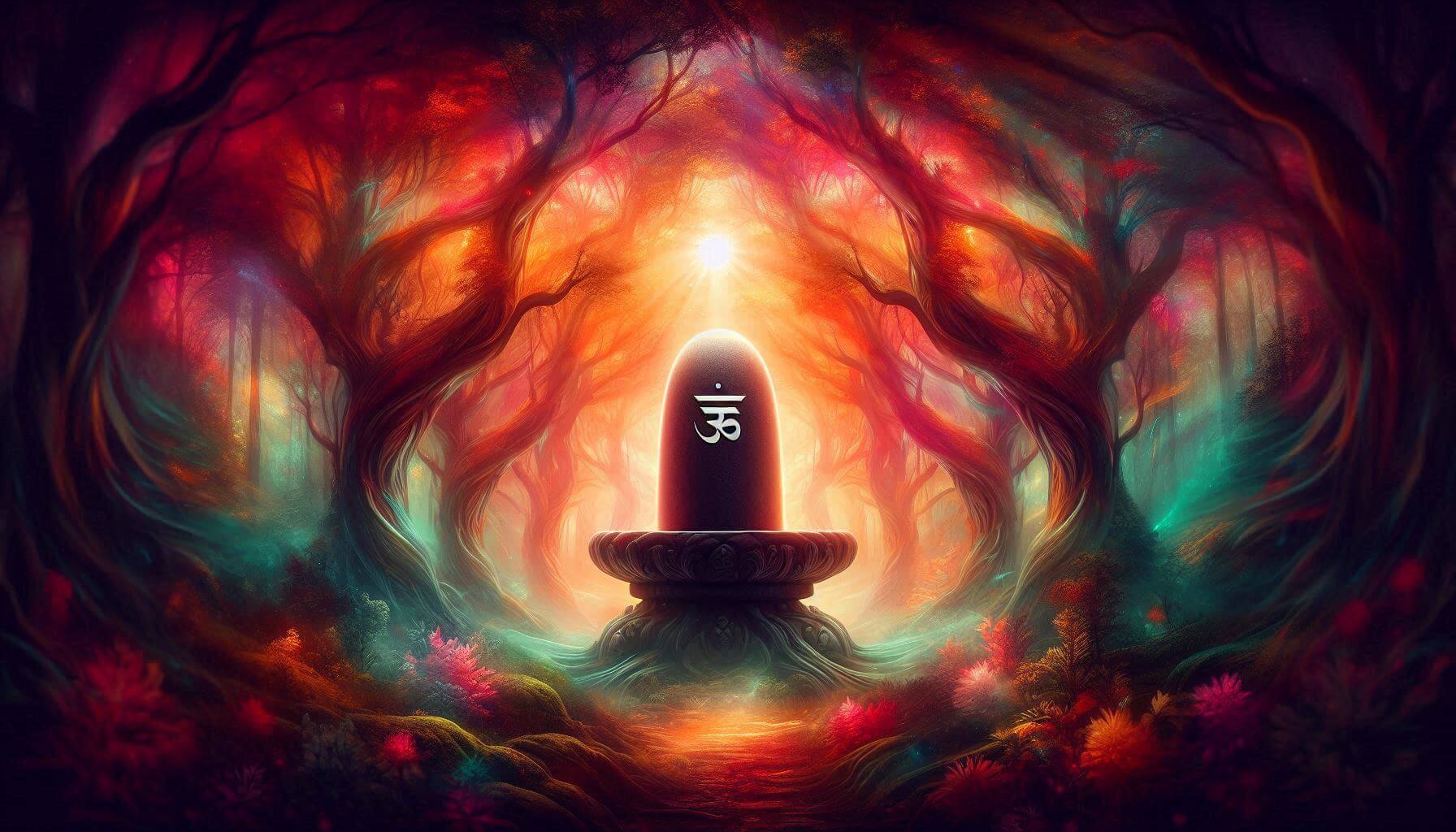
The worship of Shiv in the phallic form (Shivling) is one of Hinduism’s most ancient and universal practices. But why is Shiv worshipped specifically in this form? What event led to the establishment of the Shivling as we know it today?
Shiv Purana – Kotirudra Samhita, Chapter 12 – narrates a striking and symbolic episode that explains the origin of this form. The story centers around sages of the Daruvana forest, their wives, and a divine test conducted by Lord Shiv Himself.
The Sages of Daruvana and Shiva’s Test
In a previous Kalpa, as the scripture explains, there existed an exceptional forest named Daruvana, inhabited by powerful sages deeply devoted to Shiva. They performed austerities, meditated on him, and worshipped him thrice daily.
One day, as these sages left to collect sacrificial twigs, Lord Shiv decided to test the depth and nature of their devotion. He descended into the forest in an unusual, terrifying, and extreme form:
- Naked
- Body smeared with ash
- Radiant but appearing like an Avadhuta
- Holding his own organ
- Performing strange, provocative gestures
This was not out of impurity but to examine the true spiritual maturity of the sages, as well as the stability of their minds and their wives’ sense of detachment.
The Reaction of the Sages and Their Wives
When the women of the forest saw this form of Shiva:
- Some became frightened
- Others felt curious and drawn toward him
- A few even embraced him or held his hands
The sages returned to find their wives in commotion and Shiva performing startling acts. Shocked and angered—unable to recognize Shiva due to Maya—they condemned him, declaring:
“You are acting against the Vedic path. Let your organ fall to the ground!”
Their harsh words, spoken in delusion, triggered an unimaginable event.
Shiva’s Organ Falls and Causes Universal Turmoil
Immediately upon the sages’ curse-like proclamation, Shiva’s organ detached and fell. But what followed was catastrophic:
- It began moving across the universe
- Wherever it went, it burned and destroyed
- It roamed through Patala, Earth, and Heaven
- All beings—humans, sages, even gods—were thrown into chaos
The entire cosmos trembled due to the unrestrained, fiery power of the organ (linga). The sages realized that their reaction, driven by ignorance, had unleashed something they could not control.
All Gods Approach Brahma for Help
Unable to stop the destruction, the gods and sages approached Brahma for guidance. Brahma reprimanded them:
- They had insulted a divine guest (Shiv)
- They had acted in ignorance
- They misunderstood the nature of Shiv’s appearance
He asserted:
“As long as the organ does not become stable, the worlds will not know peace.”
The only solution: Propitiate Goddess Parvati, the only being capable of stabilizing Shiva’s immense energy.
The Ritual to Stabilize the Fiery Linga
Brahma instructed the sages in a specific Vedic procedure:
- Draw an eight-petalled lotus diagram
- Place a sacred pot filled with holy waters, Durva sprouts, and barley
- Invoke and worship the pot with Vedic mantras
- Sprinkle the roaming linga with sanctified water using Satarudriya mantras
- Pray to Goddess Parvati to assume the form of the Yoni (vaginal passage) so the linga could be held and stabilized
Parvati accepted the plea and manifested in the form required to support Shiva’s uncontrolled linga.
When Parvati embraced the linga, it became calm and stationary. Immediately, harmony returned to the universe.
The Origin of the Shivling
This stabilized form—the union of Shiva (linga) and Shakti (yoni)—became the universally worshipped Shivling.
According to the scripture:
- This linga became famous as “Hatesa” and “Sivisiva”
- Worshipping this form grants happiness, prosperity, and ultimately liberation
- It symbolizes the balance of cosmic energies, the foundation of creation
Thus, the Shivling is not merely a symbol; it is a representation of the divine energy that stabilizes and sustains the universe.
Conclusion
Shiv Purana’s account of the sages of Daruvana reveals that the Shivling that is worshipped today is a sculpture showing the union of Shivling and yoni
← Shiv Purana: Origin of Shiva, Vishnu, Brahma, and the Supreme Truth Why Did Lord Brahma Lose His Fifth Head →