Why Did Lord Brahma Lose His Fifth Head
Shiv Purana / Why Did Lord Brahma Lose His Fifth Head
Why Did Lord Brahma Lose His Fifth Head
Why Did Lord Brahma Lose His Fifth Head? The True Story from Shiv Purana
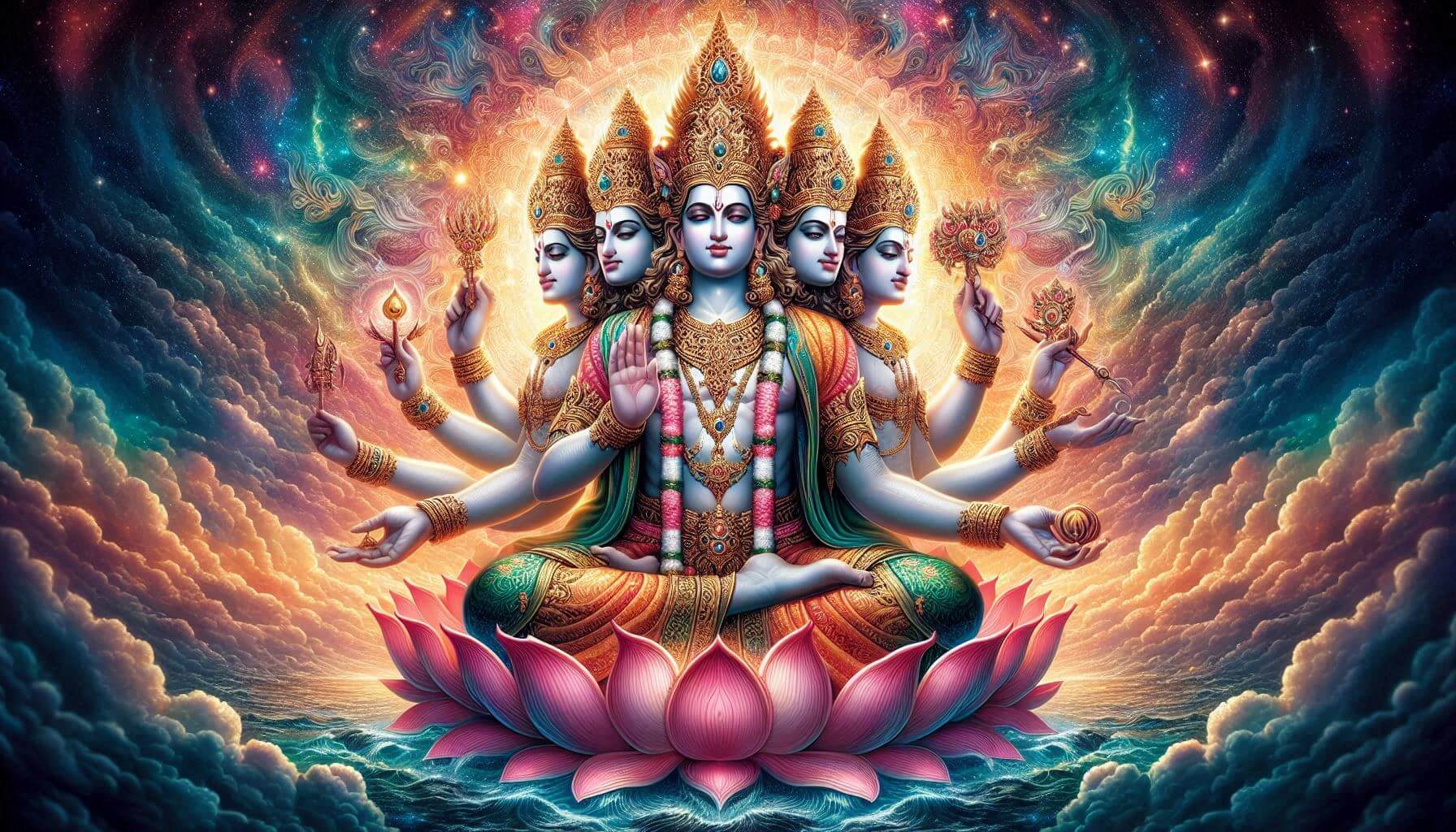
Brahma, the creator god in the Hindu Trinity, is often depicted with four heads—earning the title Chaturanan. However, few people know that Brahma originally had five heads, making him Panchanan. What happened to Brahma’s fifth head? Why did he lose it? The Shiv Purana narrates the complete and authentic account behind this mysterious event.
This article presents the true story of Brahma’s fifth head, as revealed in the Shiv Purana, Vidhweshwar Samhita, Chapter 8.
The Conflict Between Brahma and Vishnu
According to the Shiv Purana, Brahma and Vishnu once engaged in a serious dispute, which quickly escalated into a destructive war. Both gods used powerful weapons, and the conflict threatened cosmic stability.
To put an end to the fight, a radiant, infinite pillar of light—a divine Shiv Ling—suddenly appeared between them. This blazing column was manifested by Lord Shiva Himself.
Bewildered and humbled, Brahma and Vishnu decided to determine the origin of the pillar to resolve their superiority debate:
- Brahma flew upwards.
- Vishnu travelled downwards.
Both searched endlessly but could not find either end of the infinite pillar.
Brahma Lies About the Shiv Ling
When they returned:
- Vishnu honestly admitted he could not find the end.
- Brahma lied, claiming he had reached the top of the pillar.
This lie—uttered from his fifth head—became the cause of his punishment.
Shiva Punishes Brahma: The Cutting of the Fifth Head
Upon Brahma’s lie, Lord Sadashiv (also known as Kaal or Brahm) appeared to deliver justice. To punish Brahma’s arrogance and falsehood, Shiva created a fierce divine being—Bhairava—from the middle of His brows.
The Shiv Purana describes the moment in vivid detail:
Key Verses from Shiv Purana, Vidhweshwar Samhita, Chapter 8
- Bhairava bowed to Shiva and awaited His order.
- Shiva commanded him: “Here is Brahma, guilty of falsehood. Punish him with your sword.”
Bhairava seized Brahma by the tuft of his fifth head and prepared to cut it off. Terrified, Brahma trembled and fell at Bhairava’s feet.
Out of compassion, Lord Vishnu (Acyuta) intervened and pleaded for forgiveness on Brahma’s behalf.
Shiva relented—but the punishment had already been carried out:
✨ Brahma’s fifth head was severed—the head from which the lie had been spoken.
Shiva’s Judgment on Brahma
After stopping further punishment, Shiva proclaimed:
- Brahma would not be worshipped by the masses.
- Brahma would not have temples or festivals dedicated to him.
This divine decree explains why Brahma is the least-worshipped deity, and why temples dedicated to Brahma are extremely rare.
Conclusion: The True Reason Brahma Is Now Four-Headed
The Shiv Purana makes it clear:
- Brahma originally had five heads (Panchanan).
- He lied about witnessing the top of the infinite Shiv Ling.
- Lord Shiva created Bhairava to punish him.
- Bhairava cut off Brahma’s fifth head on Shiva’s command.
- Brahma became Chaturanan, the four-headed deity we know today.
This story highlights the dangers of ego, falsehood, and claiming superiority—even among the highest deities.
← The Story Behind Shiva’s Phallic Form (Shivling)